



Called to Be Free consists of all kinds of texts that you can use in different ways:
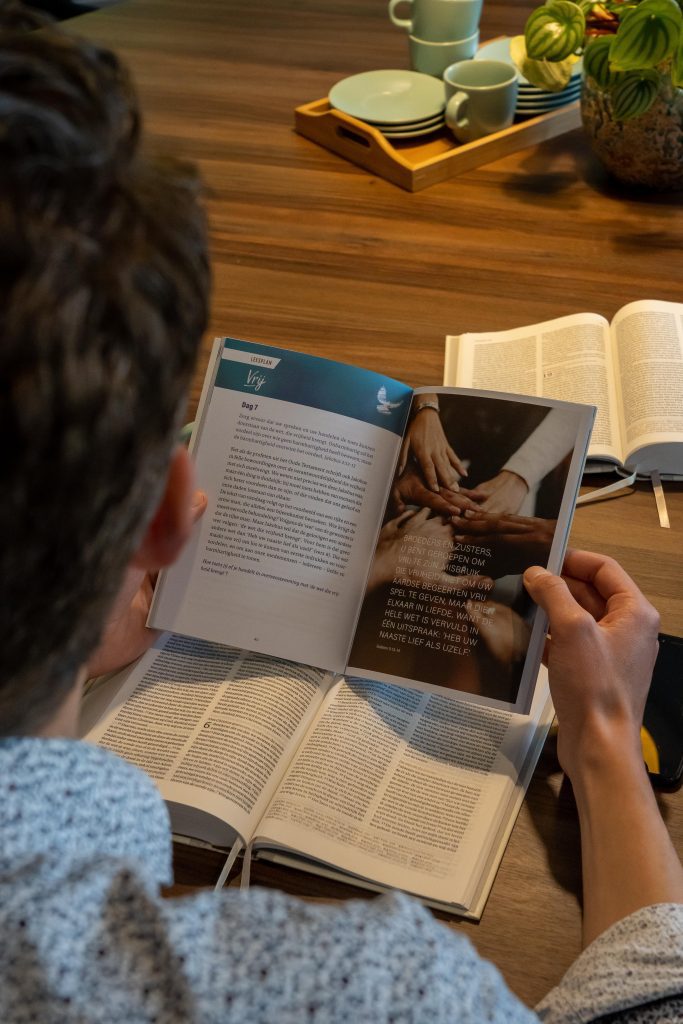
Slavery was an important part of the history of the church and has had an enormous influence on the development of Christianity. It is therefore good to understand this history and to acknowledge the role of the church in the slavery system, which in turn can contribute to reconciliation and restoration.
Hedwig Komproe
The Dutch-Flemish Bible Society received a request from various churches to develop material to reflect on slavery from a biblical perspective. The aim was to help churches and Bible readers grasp the nature of slavery in the Bible and to read and learn about the biblical perspective of freedom for all people. This is, therefore, the approach taken in this booklet, titled *Called to Be Free*.
The booklet costs only 1,00 euro.

Knowledge – Awareness – Acknowledgment of our shared history are (in my opinion) necessary to ask for and receive apologies with a sincere heart, in order to arrive at a salutary processing of the history of slavery for both white and black.
Rhoïnde Doth


The history of slavery is something we all share. We must face it together so that healing and reconciliation can come. The history of slavery has its effect in the present. As believers, we play an important role in bringing people together, in creating a “safe space” for conversation, and in encouraging an intercultural and interracial embrace. Especially among those who are “in Christ,” as a model for the world.
Marlon Winedt