


September 2026, by Joyce de Jongh (Dutch-Flemish Bible Society )
I am in Palenque, a small city in one of the poorest regions of Mexico. Together with two colleagues from the Dutch-Flemish Bible Society (NBG), I am attending the official presentation of the Bible translation into Ch'ol. After sixteen years of translation work, this Bible is finished, including the deuterocanonical books, and so we have been invited to a celebration on the grounds of the Catholic Church.
Gratefully, we look for a spot in the shade of the canopy, but with a temperature of 36 degrees, sweat still quickly drips down our backs.
The presentation of the Ch'ol Bible follows the celebration of the Mass, led by Monsignor Rodrigo Aguilar Martínez. He expresses how grateful he is for the Ch'ol Bible.
'When I was a young man studying at the seminary, I never thought that this Bible would ever come into existence. But God speaks our language too! I am so grateful for the efforts of the translators, and for the donors of the Bible Society. Without them, this Bible would not have come into existence,' he says.
'Identity and dignity'
Ch'ol is one of the more than 360 indigenous languages in Mexico, and is spoken by over 250.000 people. It is an ancient Mayan language that can be traced all the way back to the ancient hieroglyphs on the ruins of the Mayan pyramids, here in Palenque.
Ch'ol has an extra vowel; a kind of guttural sound that you also hear in some African languages. For many people in this region, Ch'ol is the only language they speak; they do not understand Spanish. That makes this Bible translation so important: until now, people had no access to God's Word.
'The Bible is a source of life for everyone,' says Iskra Galicia, project leader at the Mexican Bible Society. 'God speaks all languages, and that is why we continue to strive for new languages, such as Ch'ol.'
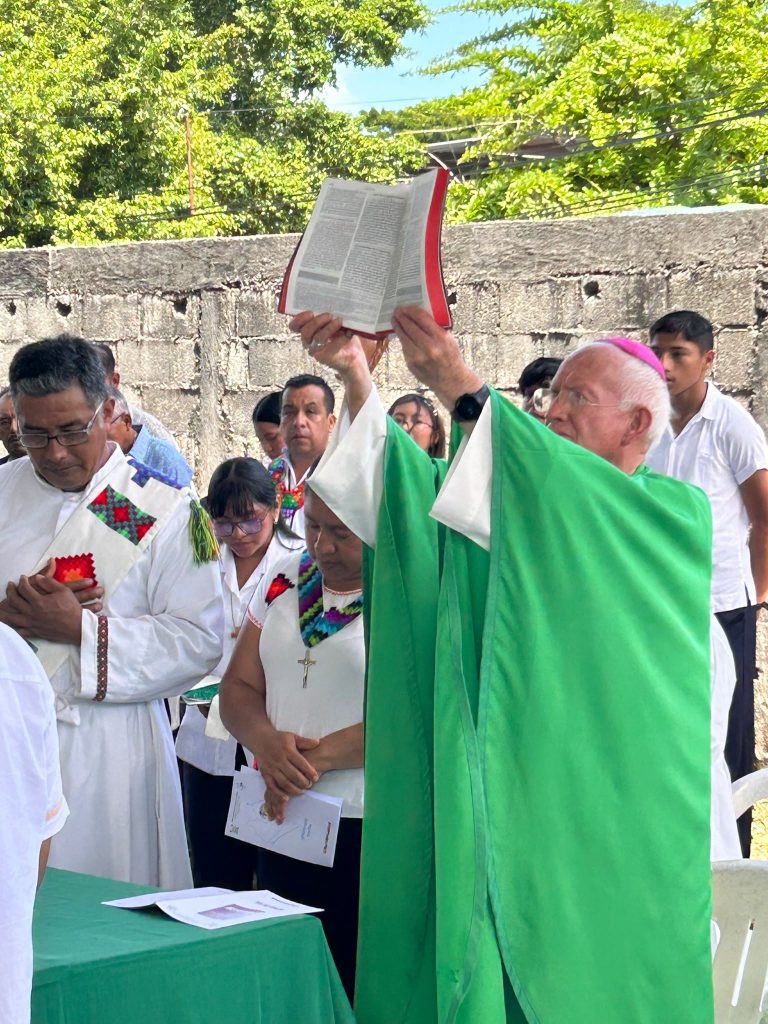
Michaela Mendez, a nun who worked as a translator, says: 'Language is such a personal thing. The Bible in Ch'ol is an acknowledgment of our identity and dignity. This Bible has also contributed to the uniformity of our language. Now we can discuss the Bible with one another and understand what God is saying.'
Another life
Meanwhile, the ceremony reaches its climax: the distribution of the Ch'ol Bibles. Those present—primarily pastors, evangelists, and leaders from the Ch'ol community—line up in neat rows. Everyone receives their own copy, and boxes of Bibles are ready for the pastors for their congregation members.
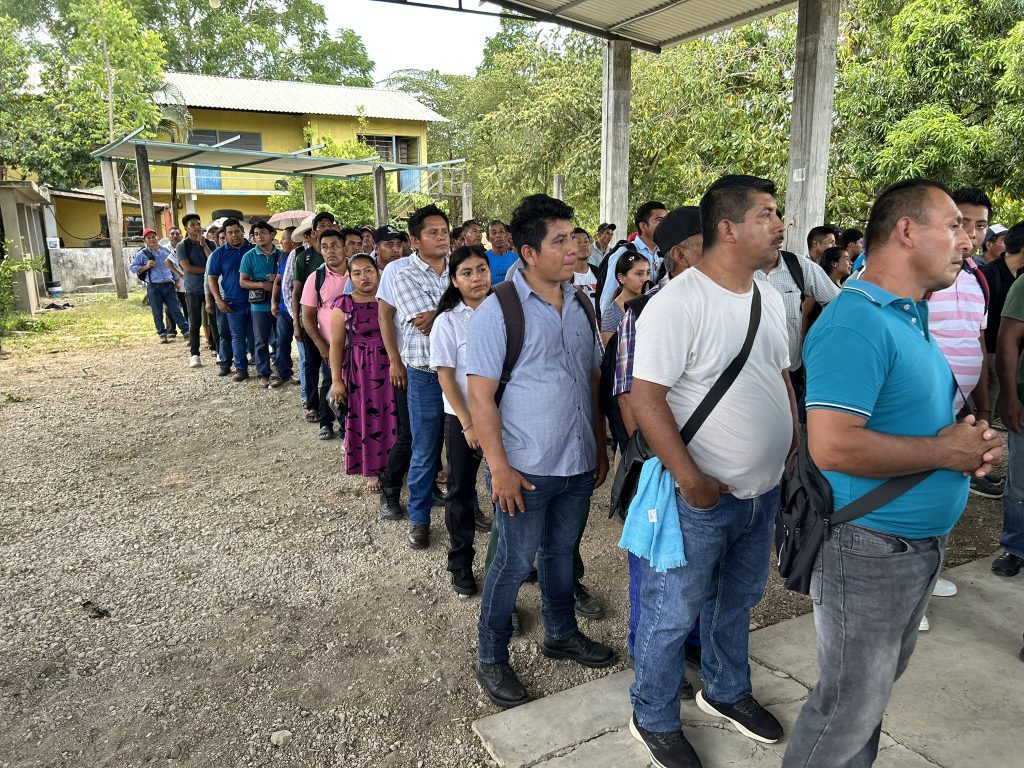
The so-called Proclaimers are also being handed out. These are solar-powered audio players containing the entire Bible, read aloud in Ch'ol.
In this region, where many people are illiterate, it is a practical tool. I spoke with Juana, who beamingly accepted a large stack of Proclaimers. Juana and her husband work as missionaries in the Lacondona jungle, in the border region with Guatemala. Most people in this area speak only Ch'ol, and most cannot read. That is why she is so grateful for the Proclaimers:
By listening to the Bible, people can discover who God is and what His purpose is. That will change their lives!
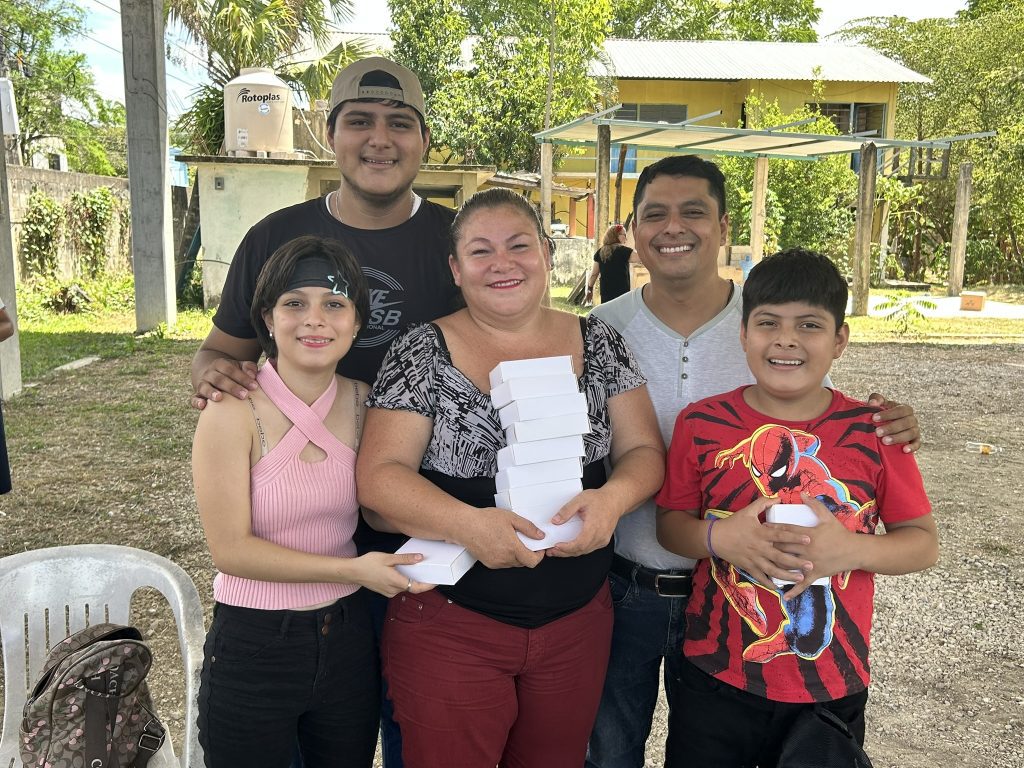
The Proclaimer is also used to teach people to read and write. By comparing the text in the Bible with the audio, people learn to recognize words and can practice reading, and later writing. This increases their chances of pursuing an education and finding work.
Worth the loss
Today, Cesia is also finally presented with her Ch'ol Bible. Her father is part of the translation team and had to be away for several weeks every six months for training and consultations.
I knew my father was doing important work, but I missed him so much! Especially when he wasn't there again on my birthday or during special moments at school. But now that I see how happy people are with the Ch'ol Bible, I realize that it was all worth the loss. Perhaps we as a family appreciate this Bible even more because we have experienced the price that was paid for it.
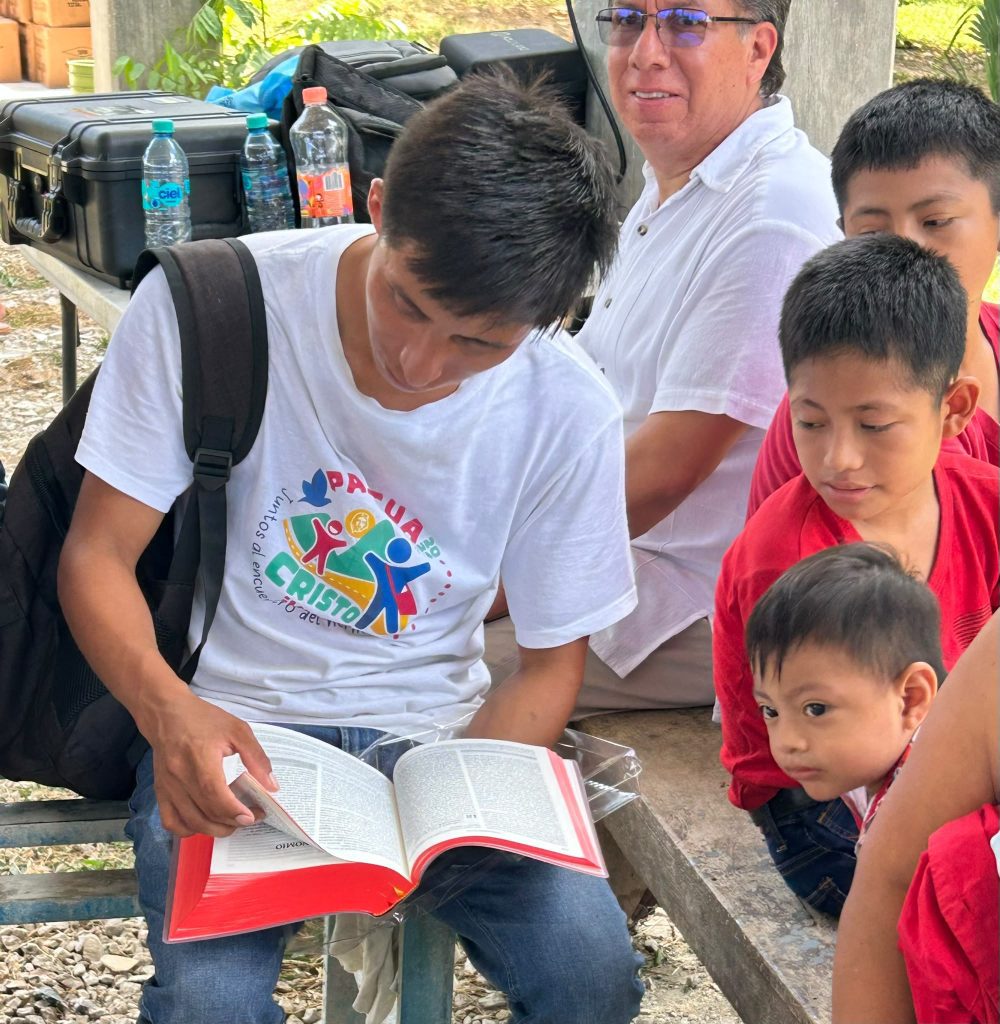
Thanks to your support
Translating the Bible is a process that takes years. That is why we are so grateful for regular donors who make these long-running Bible translation projects possible. Thanks to your support, someone in Mexico is reading the Bible for the first time today – in the language of his heart. Together, we bring the Bible closer!